About This Song
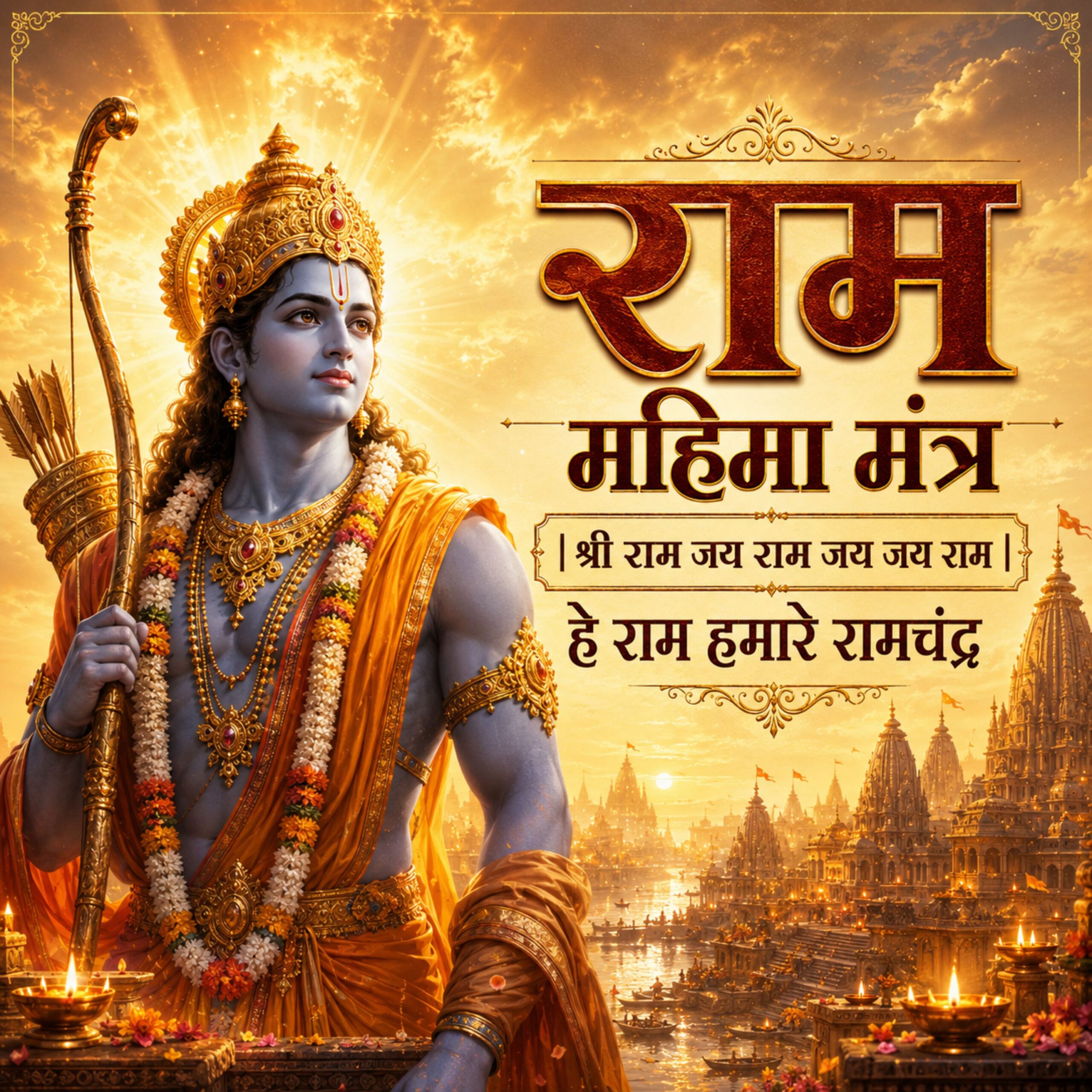
श्री राम जय राम, जय जय राम. Thirteen syllables. Seven words. Millions of hearts. This is the Ram Taraka Mantra — the mantra said to carry the soul across the ocean of birth and death — and in this EkOmkaar Musicals rendition, Ram Mahima Mantra, it blossoms into something more: a garland of Shri Ram’s names, each one a window into a different facet of his boundless glory. The chant moves like a river — the great mantra as its steady current, and wave after wave of Ram’s names rising from it: Raghuvar, Raja Ram, Siyavar, Taarak, Prabhu, Swami — before returning, always, to the tender refrain He Ram Hamare Ramchandra: “O Ram, our own Ramchandra.”
The Lyrics | गीत के बोल
श्री राम जय राम, जय जय राम
श्री राम जय राम, जय जय राम
हे रघुवर राम, हे राजा राम
हे सियावर राम, जय श्री राम
हे तारक राम, हे प्रभु राम
हे स्वामी राम, जय राम हमारे रामचंद्र
हे राम, हे राम
जय श्री राम, जय जय राम
हे राम, हे राम
जय श्री राम, जय जय राम
हे राम, हे राम
श्री राम जय राम, जय जय राम
हे राम, हे राम
हे राम हमारे रामचंद्र
हे रघुवर राम, हे राजा राम
हे सियावर राम
हे तारक राम
हे प्रभु राम
हे स्वामी राम
हे राम हमारे रामचंद्र
हे गुणवान राम
हे वीर्यवान राम
हे धर्मज्ञ राम
हे सत्यव्रत राम
हे कृतज्ञ राम
हे दृढ़प्रतिज्ञ राम
हे लोकहितकारी राम
हे मर्यादा राम
हे शीलवान राम
हे करुणामय राम
हे जितेन्द्रिय राम
हे धैर्यधाम राम
हे तेजस्वी राम
हे ज्ञानमय राम
हे विनयशील राम
हे मधुर वचन राम
हे प्रजापालक राम
हे नीतिधर राम
हे शरणागतवत्सल राम
हे दीनबंधु राम
हे राक्षस-विनाशक राम
हे भक्त-उद्धारक राम
हे अयोध्यापति राम
हे दशरथनंदन राम
हे कौशल्या-सुत राम
हे जनकप्रिय राम
हे सीतापति राम
हे लक्ष्मणप्रिय राम
हे भरत-शत्रुघ्न-बंधु राम
हे हनुमत-हृदय-वासी राम
हे सत्यसंध राम
हे धर्मरक्षक राम
हे करुणासागर राम
हे क्षमाधाम राम
हे लोकाभिराम राम
हे सर्वगुणधाम राम
हे स्वामी राम
हे राम हमारे रामचंद्र
हे रघुवर राम, हे राजा राम
हे सियावर राम
हे तारक राम
हे प्रभु राम
हे स्वामी राम
हे राम हमारे रामचंद्र
हे राम, हे राम
हे राम हमारे रामचंद्र
श्री राम जय राम, जय जय राम
श्री राम जय राम, जय जय राम
Meaning of the Lyrics
श्री राम जय राम, जय जय राम — In the tradition of mantra-shastra, every syllable here carries weight. Shri is Sita herself — the divine Shakti — so the mantra begins with the Mother before naming the Lord. In Rama, the sound Ra is fire, burning away accumulated karma, while Ma is water, the deep peace that follows. Jaya is the victory of the spirit over the flesh. Chanted together, the mantra proclaims the triumph of the Divine united with His Shakti. It is called the Taraka Mantra — from taarna, to carry across — because it is said to ferry the chanter across the ocean of samsara. He Taarak Ram in the song invokes exactly this: Ram the boatman, Ram the crossing itself.
The garland of names — The heart of this Ram Mahima is its litany of names, and it is no ordinary list. Names like Gunvaan (full of virtues), Veeryavaan (mighty), Dharmagya (knower of dharma), Satyavrat (vowed to truth), Kritagya (grateful), and Dridhpratigya (firm in resolve) echo the very qualities by which Sage Valmiki, at the opening of the Ramayana, asked Narada: “Is there any man in this world today who possesses all these virtues?” Narada’s answer was Ram. This song sings that answer back, name by name.
The names then move through Ram’s tenderness — Karunamay (compassion embodied), Sharanagat-vatsal (affectionate to all who take refuge), Deenbandhu (friend of the humble) — and through his relationships: son of Dasharath and Kaushalya, beloved of Janak, husband of Sita, brother of Lakshman, Bharat, and Shatrughna, and most intimately, Hanumat-hriday-vaasi — the one who lives forever inside Hanuman’s heart. The refrain हे राम हमारे रामचंद्र — “O Ram, our own Ramchandra” — turns all that majesty personal. He is not only the king of Ayodhya and the protector of dharma; he is ours.
History & Devotion
The mantra Shri Ram Jai Ram Jai Jai Ram was popularized by the 17th-century saint Samarth Ramdas, the guru of Chhatrapati Shivaji Maharaj, and it spread across India as the simplest and most democratic of all spiritual practices. It requires no ritual, no initiation, no fixed time or place — anyone, anywhere, in any state of life, can chant it. Goswami Tulsidas wrote in the Ramcharitmanas that among all the names of the Lord, none bears more fruit than the name of Ram.
Mahatma Gandhi kept this very mantra on his lips throughout his life. Saints of the Sant tradition — Kabir, Ravidas, Nanak — sang of Ram Naam as the one boat that never sinks. The practice of singing the divine names as a garland, a naam-mala, runs through every Indian tradition, from the Vishnu Sahasranama to the Sikh recitation of divine attributes: the conviction that the Name and the Named are one, and that to fill the tongue with the Name is to fill the heart with the One it names. This Ram Mahima Mantra rendition joins that unbroken river — the same seven words that have echoed in temples, on riverbanks, and in the quiet of countless hearts, offered here as one universal sound.
Listen & Watch
▶️ Watch on YouTube | 🎧 Listen on Spotify
जय श्री राम 🙏
More from EkOmkaar Musicals
- ram-mahima-mantra-blog
- om-gurubhyo-namah-guru-vandana-blog
- Bullah Ki Jaana Main Kaun — بلھا کی جاناں مَیں کون — Bulleh Shah Kalam | EkOmkaar Musicals
- Raatin Jagen Karen Ibadat — ਰਾਤੀਂ ਜਾਗਣ ਕਰਨ ਇਬਾਦਤ — Bulleh Shah Kalam | EkOmkaar Musicals
- Bulleh Shah’s Creative Contributions — ਬੁੱਲ੍ਹੇ ਸ਼ਾਹ — Sufi Poet of Punjab | EkOmkaar Musicals
- The Life of Meera Bai — मीरा बाई का जीवन — Her Musical Contributions to Bhakti | EkOmkaar Musicals
- He Ri Main To Prem Diwani — हे री मैं तो प्रेम दिवानी — Meera Bai Bhajan | EkOmkaar Musicals
- Papiya Re Piv Ki Baani Na Bol — पपइया रे पिव की बाणि न बोल — Meera Bai Bhajan | EkOmkaar Musicals