The same song, in words you already know
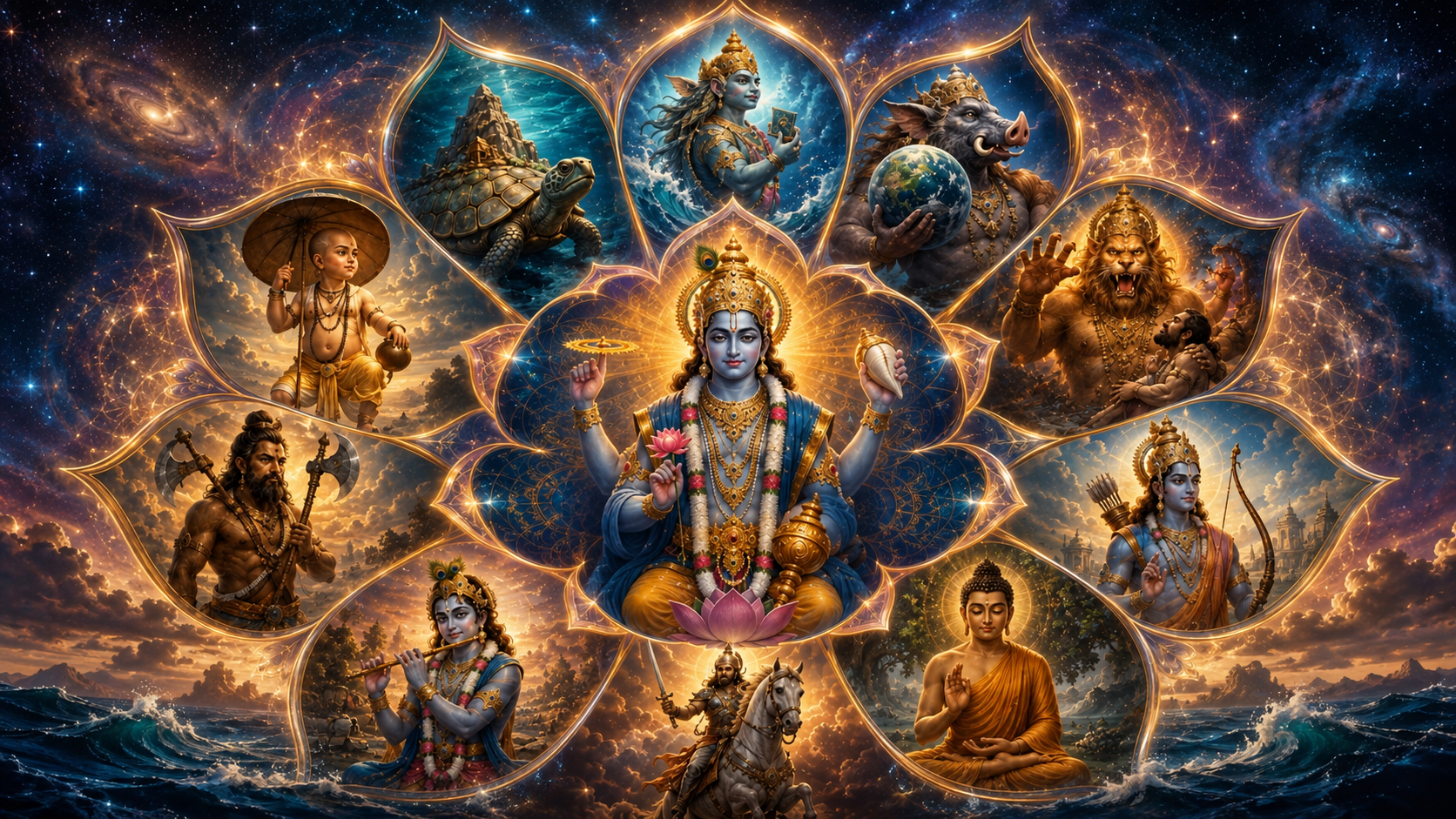
A little while ago we shared Pralaya Payodhi Jale — the 800-year-old Sanskrit song by the poet Jayadeva that praises all ten avatars of Lord Vishnu.
People loved it. But we kept hearing the same thing: “It is beautiful. What is it saying?”
So we made this one.
Keshav Madhav Gopal Krishna is the same journey through the same ten forms — the fish, the turtle, the boar, the lion-man, and the rest — but told in simple Hindi. Now you can sing it and understand it at the same time. Nothing has to be looked up. Nothing gets lost.
You already know the last line
Here is the sweetest part. Every verse of this song ends with:
जय हो जग के नाथ प्रभु जी
जय जगदीश हरे
Say that second line out loud — Jai Jagdish Hare. You have heard it before, haven’t you?
It is the same line that begins the most famous aarti in India, Om Jai Jagdish Hare, sung every evening in millions of homes. That is not a coincidence. That aarti was written in the 1800s, and its writer was echoing this very old refrain that Jayadeva had been using 700 years earlier.
So the moment this song reaches the end of a verse, most people find they are already singing along. Their voice knows the way even before their mind catches up.
What the words mean
The Hindi is gentle and clear, so you may not need much help. But here is each part with a short note, in case you want to follow closely.
The opening
केशव माधव, गोपाल कृष्ण, दीनों के रखवारे
दश रूपों में आए प्रभु जी, भक्तों के सहारे
जय हो जग के नाथ प्रभु जी, जय जगदीश हरे
Meaning: Keshav, Madhav, Gopal, Krishna — four loving names for the same Lord. He is the one who looks after those who have nobody. He came in ten different forms to stand beside the people who love him. Victory to the Lord of the world!
Deenon ke rakhware is a lovely phrase to hold on to. It means “the protector of the helpless.” The whole song is really about that one idea.
1. Matsya — the fish
प्रलय-जल में डूबे जग में, वेदों को तुमने संभाला
नाव समान बनकर प्रभु ने, धर्म-दीप फिर से उजाला
हे केशव! मीन रूप धर आए, ज्ञान सुधा के धारे
Meaning: A great flood swallowed the world, and the holy books were about to be lost in the water. The Lord became a fish and carried them to safety, like a boat carrying people across a river. He lit the lamp of dharma again. Gyan sudha ke dhare means “the flowing stream of the nectar of knowledge.”
2. Kurma — the turtle
धरती जब डगमग डोली थी, तुमने पीठ बिछाई
कच्छप रूप विशाल तुम्हारा, जग ने शरण पाई
धरणी-भार उठाकर प्रभु ने, सब संकट थे टारे
Meaning: When the earth was wobbling and could not stay steady, the Lord became a huge turtle and spread out his back so it could rest there. The whole world found shelter. He carried the weight and pushed every danger away.
3. Varaha — the boar
दाँतों के शिखर पर धरती, तुमने फिर से धारी
जैसे चंदा पर हो छाया, शोभा लगी निराली
हे केशव! वराह रूप धर, भू को पार उतारे
Meaning: The earth had sunk into the waters. The Lord came as a wild boar and lifted it up on the tip of his tusk. The poet says it looked as beautiful as the dark shadow you can see on the face of the moon.
4. Narasimha — the lion-man
कमल-करों के नख बने थे, अद्भुत तेज-कटारे
हिरण्यकशिपु का गर्व मिटाया, धर्म खड़ा द्वारे
नरहरि बनकर भक्त बचाया, अधर्म सभी संहारे
Meaning: A cruel king named Hiranyakashipu believed nothing could touch him. The Lord’s soft lotus-like hands grew nails that shone like sharp blades, and the king’s pride ended. He came as Narahari — the man-lion — to save the one who trusted him, and every wrong thing fell.
Dharm khada dware — “dharma stood at the door” — is a beautiful line. It hints at the old story that this all happened right in a doorway.
5. Vamana — the small boy
तीन पगों की लीला करके, बलि का मान झुकाया
चरण-नखों से निकले जल ने, जन-जन को पावन बनाया
हे केशव! वामन बन आए, दीनों के रखवारे
Meaning: King Bali ruled everything and was very proud. The Lord arrived as a short young boy and asked only for as much land as he could cross in three steps. Then he grew, and three steps were enough for all the worlds. The story says water touched his toenail at the top of the sky and became the Ganga, which still makes people clean today.
6. Parashurama — the sage with the axe
जब अधर्म से भर गए क्षत्रिय, जग में पाप बढ़ाया
भृगुपति बनकर तुमने प्रभु जी, अन्याय-भार हटाया
भव-तापों को शांत किया तुम, धर्म-द्वार फिर खोले
Meaning: Some kings had turned unfair and were hurting their own people. The Lord came as Bhrigupati — Parashurama — and lifted that weight of injustice off the world. He cooled the fever of the age and opened the door of dharma once more.
The Sanskrit original is much fiercer here. This Hindi version keeps the meaning but says it kindly, which makes it easier to sing with children in the room.
7. Rama — the prince of Ayodhya
रघुपति बनकर रण में तुमने, रावण शीश गिराए
दशमुख के अभिमान को हरकर, सत्य-ध्वज लहराए
धर्म, मर्यादा, प्रेम-पथ के, तुम उजले उजियारे
Meaning: As Raghupati — Lord Rama — he faced ten-headed Ravana in battle and brought his pride down. The flag of truth flew again. He is the shining light of three things: dharma, maryada (living with dignity and keeping your word), and the path of love.
8. Balarama — the one with the plough
निर्मल तन पर मेघ-से वस्त्र, शोभित रूप तुम्हारा
हलधर बनकर तुमने प्रभु जी, धरती को संवारा
यमुना भी भय छोड़ तुम्हारे, चरणों में आ जाए
Meaning: Krishna’s elder brother had fair, clear skin and wore a robe dark as a rain cloud. He was called Haladhar — the one who carries the plough, a farmer’s tool rather than a weapon — and he cared for the land. The old story says he once called the river Yamuna to come closer, and here the song says she let go of her fear and came to rest at his feet.
9. Buddha — the compassionate one
करुणा-हृदय से तुमने देखा, पशु-बलि का दुख भारी
हिंसा के पथ को तुमने रोका, दया बनी तुम्हारी
बुद्ध रूप में प्रेम सिखाया, करुणा के तुम धारे
Meaning: This time he did not fight anybody at all. He simply looked, with a heart full of karuna (compassion), at the pain of animals being killed in sacrifices — and he stopped that path. He taught love, and became a flowing stream of kindness.
Notice what changes here. Nine forms use strength. This one uses only a soft heart, and it still changes the world.
10. Kalki — the one still to come
जब अधर्म अंधेरा फैलाए, जग का सत्य छिपाए
कल्कि बनकर करवाल धारी, दुष्टों को मिटाए
धूमकेतु-सा तेज तुम्हारा, तम के बंधन हारे
Meaning: This one has not happened yet. When unfairness spreads like darkness and hides what is true, the Lord will come as Kalki, carrying a sword. His light will streak across the sky like a comet, and the chains of darkness will lose.
The closing
जयदेव कवि की यह वाणी, सुख-शुभ रस बरसाए
जो भी प्रेम सहित इसे सुने, भव-सागर तर जाए
दस-दस रूपों में तुम आए, जग के पालनहारे
Meaning: This is the voice of the poet Jayadeva, raining down happiness and goodness. Whoever listens to it with love crosses the great ocean of life. You came in ten forms, O keeper of the world.
Then the opening returns one last time, and the song closes where it began — with four names and a promise.
Why sing it in Hindi?
Sanskrit is the language this song was born in, and there is real beauty in singing the exact syllables Jayadeva chose 800 years ago. We are not replacing that.
But something different happens when you sing in your own tongue. You are not just making a sound and hoping the feeling arrives. You are saying, out loud, that a boar lifted the earth on his tusk. That a small boy crossed the sky in three steps. That a heart full of kindness once stopped a whole practice of cruelty.
Children pick this version up in one listen. Grandparents can follow every word. Nobody has to be told what it means.
Our suggestion: keep both. Sing the Hindi one to learn the stories. Sing the Sanskrit one when you want to feel very old words in your mouth. They are the same river, just at two different bends.
When to sing it
This is a Vishnu song, so it belongs to Vishnu’s days.
Ekadashi comes twice a month, on the eleventh day of each half of the moon’s cycle, and many people fast and turn their minds to Vishnu. This bhajan is easy company for such a day — Kamika Ekadashi is on Sunday, 9 August 2026, and Putrada Ekadashi on 23–24 August.
Krishna Janmashtami falls on Friday, 4 September 2026 (and 5 September for many Vaishnava temples). If your family stays awake for the midnight jagran, this is a good one to have ready. It opens with Gopal Krishna and ends with Gopal Krishna, and in between it quietly shows that the baby born that night in Mathura is the same one who was the fish, the turtle, the boar and the lion.
And on Parivartini Ekadashi, 22 September 2026, which belongs to the Vamana avatar, you might jump straight to verse five — तीन पगों की लीला करके.
Listen
Play it once just for the tune. Play it again with the words above. By the third time, we think you will be singing the Jai Jagdish Hare without even deciding to.
🎧 Listen to Keshav Madhav Gopal Krishna on Spotify
📖 हिंदी में पढ़ना चाहें? यह लेख हिंदी में यहाँ पढ़िए.
If this brings you a moment of peace, please share it with someone who is fasting this Ekadashi. 🙏
Keshav Madhav Gopal Krishna — Hindi Dashavatar bhajan, based on the Dashavatara Stotra from the Geet Govinda of Sri Jayadeva. Available now on our YouTube channel and on all streaming platforms through EkOmkaar Musicals. Looking for the original Sanskrit? Pralaya Payodhi Jale is here (listen on Spotify).
More from EkOmkaar Musicals
- Pralaya Payodhi Jale: The Song of Vishnu’s Ten Avatars, Explained Simply
- The Mahabharata Version of the Shiva Sahasranama | EkOmkaar Musicals
- Shiva Sahasranama: History and the Different Versions | EkOmkaar Musicals
- Shiva Sahasranamavali: Names and Meanings, One Line Each (Part 1) | EkOmkaar Musicals
- Main Paiya Hai | ਮੈਂ ਪਾਇਆ ਹੈ — Bulleh Shah Kafi | Lyrics & Meaning
- Ni Saiyon Main Gayi Gavachi | ਨੀ ਸਈਓ ਮੈਂ ਗਈ ਗਵਾਚੀ — Bulleh Shah Kafi | Lyrics & Meaning
- Main Aape Ranjha Hoi | ਮੈਂ ਆਪੇ ਰਾਂਝਾ ਹੋਈ — Bulleh Shah Kafi | Lyrics & Meaning
- Saade Val Mukhda Mod | ਸਾਡੇ ਵੱਲ ਮੁਖੜਾ ਮੋੜ — Bulleh Shah Kafi | Lyrics & Meaning
Leave a Reply