About This Song
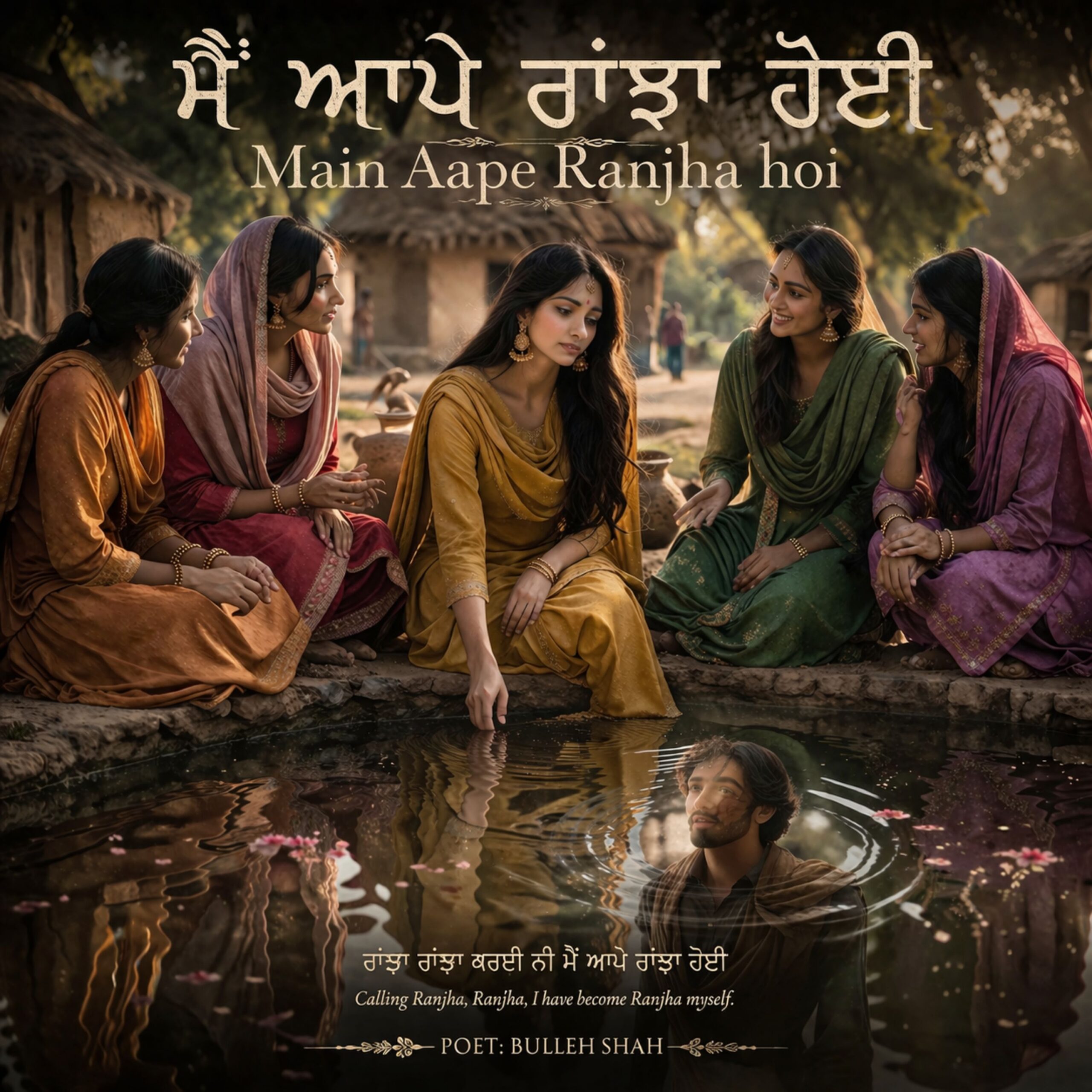
ਰਾਂਝਾ ਰਾਂਝਾ ਕਰਦੀ ਨੀ, ਮੈਂ ਆਪੇ ਰਾਂਝਾ ਹੋਈ. Saying “Ranjha, Ranjha” over and over, I have become Ranjha myself. This is the most quoted line Bulleh Shah ever wrote, and one of the great statements of mystical union in any language — the moment where the one who longs and the one longed for stop being two.
Then comes the demand that follows from it: call me Dhido Ranjha, let no one call me Heer. Not a metaphor about feeling close to someone. A refusal of her own name. This EkOmkaar Musicals rendition lets that refrain circle the way the thought circles, until the repetition itself becomes the argument.
Lyrics — ਮੈਂ ਆਪੇ ਰਾਂਝਾ ਹੋਈ
ਰਾਂਝਾ ਰਾਂਝਾ ਕਰਦੀ ਨੀ,
ਮੈਂ ਆਪੇ ਰਾਂਝਾ ਹੋਈ ।
ਸੱਦੋ ਨੀ ਮੈਨੂੰ ਧੀਦੋ ਰਾਂਝਾ,
ਹੀਰ ਨਾ ਆਖੋ ਕੋਈ ॥
ਰਾਂਝਾ ਮੈਂ ਵਿੱਚ, ਮੈਂ ਰਾਂਝੇ ਵਿੱਚ,
ਹੋਰ ਖ਼ਿਆਲ ਨਾ ਕੋਈ ।
ਮੈਂ ਨਹੀਂ, ਉਹ ਆਪ ਹੈ,
ਆਪਣੀ ਆਪ ਕਰੇ ਦਿਲ-ਜੋਈ ॥
ਹੱਥ ਖੂੰਡੀ, ਮੇਰੇ ਅੱਗੇ ਮੰਗੂ,
ਮੋਢੇ ਭੂਰਾ ਲੋਈ ।
ਬੁੱਲ੍ਹਾ ਹੀਰ ਸਲੇਟੀ ਵੇਖੋ,
ਕਿੱਥੇ ਜਾ ਖਲੋਈ ॥
The opening ਟੇਕ returns between verses, the way the kafi is traditionally sung.
देवनागरी में — Lyrics in Devanagari
राँझा राँझा कर दी नी,
मैं आपे राँझा होई ।
सद्दो नी मैनूँ धीदो राँझा,
हीर ना आखो कोई ॥
राँझा मैं विच्च, मैं राँझे विच्च,
होर ख़याल ना कोई ।
मैं नहीं, उह आप है,
आपनी आप करे दिल-जोई ॥
हथ खूंडी, मेरे अग्गे मंगू,
मोढे भूरा लोई ।
बुल्ल्हा हीर सलेटी वेखो,
कित्थे जा खलोई ॥
Meaning of the Lyrics
The refrain. Repeating “Ranjha, Ranjha,” I have myself become Ranjha. Call me Dhido Ranjha now — let no one call me Heer.
Second verse. Ranjha is within me and I am within Ranjha; there is no other thought left. It is not I who exist — he himself is. He consoles his own heart, in me.
Third verse. A shepherd’s staff in my hand, the cattle grazing ahead of me, a rough brown blanket over my shoulder. Bulleha — look where Heer of the Sials has ended up standing.
The line that carries the theology is ਮੈਂ ਨਹੀਂ, ਉਹ ਆਪ ਹੈ — I am not, he himself is. This is the Sufi doctrine of fana, the annihilation of the self in the Beloved, put into the plainest Punjabi available. And the half-line after it is stranger still: he consoles his own heart. If only the Beloved remains, then the longing, the consoling, and the one being consoled are all him. The lover has dropped out of her own love story.
The third verse makes it physical. Heer was a Sial — daughter of a landed clan, a woman of standing. Here she has the staff, the cattle, and the coarse blanket of a herdsman: Ranjha’s things. She has not merely taken his name, she has taken his work and his poverty. Bulleh Shah’s closing line invites us to look at where she has ended up standing, and the wonder in it is real — this is what love actually costs, and she has paid it without hesitation.
History & Devotion
Bulleh Shah (c. 1680–1757) was a Punjabi Sufi of the Qadiri order, born in Uch and settled at Kasur, in present-day Pakistan. His murshid was Shah Inayat Qadiri, an Arain by caste — a gardener’s caste — while Bulleh Shah was a Syed, claiming descent from the Prophet. His family disowned him for bowing to a man they considered his social inferior. He wrote his answer in Punjabi, for people who worked with their hands, and it has outlived every objection.
Knowing that, this kafi reads differently. A Syed insisting on being called by a herdsman’s name is not writing a general poem about mystical union; he is describing what he actually did with his life. Dhido Ranjha was a cowherd. Heer was the daughter of the Sials. When Bulleh Shah has Heer demand to be called Ranjha, he is dissolving caste, gender, and family in one line — the three things his own society had used against him.
The Heer–Ranjha romance is Punjab’s great love story, given its definitive form by Waris Shah a generation after Bulleh Shah. Sufi poets reached for it constantly, because a love that overrides clan, marriage, and propriety is the nearest human parallel to a love that overrides religion, law, and the self. When Bulleh Shah speaks as Heer — a man writing in a woman’s voice — he is following a long tradition in which the soul is feminine before God.
This kafi has been sung by qawwals, folk singers, and film playback artists for generations, and its central line has passed into ordinary Punjabi speech. It is sung at his shrine in Kasur, where people of every faith still come — which is, in its way, the argument of the poem proving itself.
Listen & Watch
YouTube: Main Aape Ranjha Hoi — Bulleh Shah Kafi | EkOmkaar Musicals
Spotify: Main Aape Ranjha Hoi on Spotify
Subscribe: EkOmkaar Musicals on YouTube
ਇਸ਼ਕ ਅੱਲਾਹ 🙏
More from EkOmkaar Musicals
- Saade Val Mukhda Mod | ਸਾਡੇ ਵੱਲ ਮੁਖੜਾ ਮੋੜ — Bulleh Shah Kafi | Lyrics & Meaning
- Ranjha Jogira Ban Aaya | ਰਾਂਝਾ ਜੋਗੀੜਾ ਬਣ ਆਇਆ — Bulleh Shah Kafi | Lyrics & Meaning
- The Life of Meera Bai — मीरा बाई का जीवन — Her Musical Contributions to Bhakti | EkOmkaar Musicals
- Mere To Giridhar Gopal | मेरे तो गिरिधर गोपाल — Meera Bai Bhajan | Lyrics & Meaning
- Pyare Darsan Dijyo Aay | प्यारे दरसन दीज्यो आय — Meera Bai Bhajan | Lyrics & Meaning
- Chalan Vahi Desh | चालाँ वाही देस — Meera Bai Bhajan | Lyrics & Meaning
- Main Girdhar Ke Ghar Jaaun | मैं तो गिरधर के घर जाऊँ — Meera Bai Bhajan | Lyrics & Meaning
- Jai Jagdish Hare | जय जगदीश हरे — Dashavatar Bhajan | Lyrics & Meaning