Male Solo
About This Song
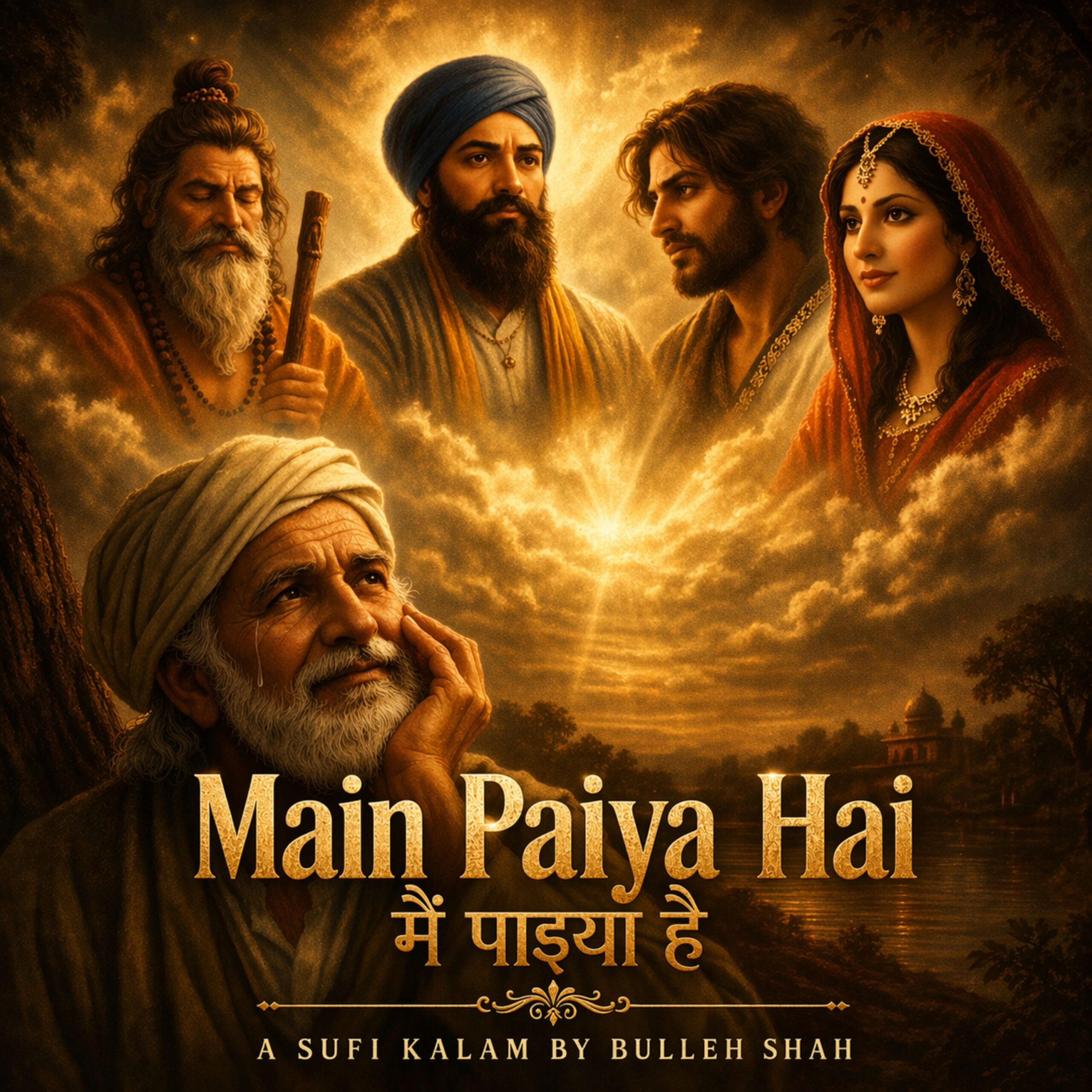
ਮੈਂ ਪਾਇਆ ਹੈ — ਤੈਂ ਆਪ ਸਰੂਪ ਵਟਾਇਆ ਹੈ. I have found you. You yourself have been changing your form all along. Bulleh Shah opens with the shout of discovery and then spends the whole kafi listing the disguises — and the list is the most quietly radical thing in Punjabi devotional poetry.
He finds the One reading Muslim books and doing Hindu japa. Sitting as the qazi on the pulpit and wandering as the matted-haired bairagi. Enemy and friend. Guru and disciple. Laila and Majnun — both the lover and the beloved. The point is not tolerance, which would still keep the categories intact. The point is that there was only ever one thing, putting on costumes.
Lyrics — ਮੈਂ ਪਾਇਆ ਹੈ
ਮੈਂ ਪਾਇਆ ਹੈ, ਮੈਂ ਪਾਇਆ ਹੈ,
ਤੈਂ ਆਪ ਸਰੂਪ ਵਟਾਇਆ ਹੈ ॥
ਕਹੂੰ ਤੁਰਕ ਕਿਤਾਬਾਂ ਪੜ੍ਹਦੇ ਹੋ,
ਕਹੂੰ ਭਗਤ ਹਿੰਦੂ ਜਪ ਕਰਦੇ ਹੋ ।
ਕਹੂੰ ਗੋਰਖੰਡੀ ਵਿਚ ਪੜਦੇ ਹੋ,
ਹਰ ਘਰ ਘਰ ਲਾਡ ਲਡਾਇਆ ਐ ॥
ਕਿਤੇ ਵੈਰੀ ਹੋ, ਕਿਤੇ ਬੇਲੀ ਹੋ,
ਕਿਤੇ ਆਪ ਗੁਰੂ ਕਿਤੇ ਚੇਲੀ ਹੋ ।
ਕਿਤੇ ਮਜਨੂੰ ਹੋ, ਕਿਤੇ ਲੈਲਾ ਹੋ,
ਹਰ ਘਟ ਘਟ ਬੀਚ ਸਮਾਇਆ ਐ ॥
ਕਹੂੰ ਗ਼ਾਫ਼ਲ, ਕਹੂੰ ਨਮਾਜ਼ੀ ਹੋ,
ਕਹੂੰ ਮਿੰਬਰ ਤੇ ਬਹਿ ਕਾਜ਼ੀ ਹੋ ।
ਕਹੂੰ ਤੇਗ਼ ਬਹਾਦਰ ਗ਼ਾਜ਼ੀ ਹੋ,
ਕਹੂੰ ਆਪਣਾ ਪੰਥ ਬਣਾਇਆ ਐ ॥
ਕਹੂੰ ਮਸਜਦ ਦਾ ਵਰਤਾਰਾ ਐ,
ਕਹੂੰ ਬਣਿਆ ਠਾਕੁਰ-ਦੁਆਰਾ ਐ ।
ਕਹੂੰ ਬੈਰਾਗੀ ਜਟ ਧਾਰਾ ਐ,
ਕਹੂੰ ਸ਼ੈਖ਼ਨ ਬਣ ਬਣ ਆਇਆ ਐ ॥
ਬੁੱਲ੍ਹਾ ਸ਼ਹੁ ਦਾ ਮੈਂ ਮੁਹਤਾਜ ਹੋਇਆ,
ਮਹਾਰਾਜ ਮਿਲੇ ਮੇਰਾ ਕਾਜ ਹੋਇਆ ।
ਮੁਝੇ ਪਿਆ ਕਾ ਦਰਸ ਮੇਅਰਾਜ ਹੋਇਆ,
ਲੱਗਾ ਇਸ਼ਕ਼ ਤਾਂ ਇਹ ਗੁਨ ਗਾਇਆ ਐ ॥
देवनागरी में — Lyrics in Devanagari
मैं पाइआ है, मैं पाइआ है,
तैं आप सरूप वटाइआ है ॥
कहूँ तुरक किताबाँ पढ़ते हो,
कहूँ भगत हिन्दू जप करते हो ।
कहूँ गोरकंडी विच पड़ते हो,
हर घर घर लाड लडाइआ ऐ ॥
किते वैरी हो, किते बेली हो,
किते आप गुरू किते चेली हो ।
किते मजनूँ हो, किते लैला हो,
हर घट घट बीच समाइआ ऐ ॥
कहूँ ग़ाफ़ल, कहूँ नमाज़ी हो,
कहूँ मिम्बर ते बह काज़ी हो ।
कहूँ तेग़ बहादुर ग़ाज़ी हो,
कहूँ आपना पंथ बणाइआ ऐ ॥
कहूँ मसजद दा वरतारा ऐ,
कहूँ बण्या ठाकुर-दुआरा ऐ ।
कहूँ बैरागी जट धारा ऐ,
कहूँ शैख़न बण बण आया ऐ ॥
बुल्ल्हा शहु दा मैं मुहताज होया,
महाराज मिले मेरा काज होया ।
मुझे पिया का दरस मे’राज होया,
लग्गा इ’श्क़ ताँ इह गुन गाइआ ऐ ॥
Meaning of the Lyrics
The refrain. I have found him, I have found him — you were the one changing form all along.
First verse. Somewhere you are the Turk poring over his books; somewhere the Hindu devotee at his japa; somewhere you sit among the Gorakhpanthi yogis at their study. In every single house, you have been playing.
Second verse. Somewhere you are the enemy, somewhere the friend. Somewhere the guru, somewhere the disciple. Somewhere Majnun, somewhere Laila. You are contained within every heart there is.
Third verse. Somewhere the heedless one, somewhere the one at prayer. Somewhere the qazi seated on the pulpit. Somewhere the sword-brave warrior. And somewhere you have gone and founded your own path altogether.
Fourth verse. Somewhere the whole business of the mosque; somewhere you have become the Thakur-dwara. Somewhere the bairagi with his matted locks; somewhere you arrive dressed as the shaikh.
The signature verse. Bulleha, I became wholly dependent on the Lord. I met the Maharaj, and my work was done. The sight of my beloved became my mi’raj. Love struck — and then I sang these praises.
The pairing that gives the game away is Majnun and Laila. Everywhere else the list moves between religions, which a reader might still take as broad-mindedness. But Majnun and Laila are the lover and the beloved — the two halves of longing itself. If God is both, then the one who searches and the one being searched for were never two people. The whole drama of seeking collapses.
ਮੇਅਰਾਜ in the closing verse is the Mi’raj — the Prophet’s night ascension through the heavens, the summit of mystical experience in Islam. Bulleh Shah says that simply seeing his beloved’s face was that. It is an enormous claim, made in the last line, almost in passing.
A note on one line: ਤੇਗ਼ ਬਹਾਦਰ ਗ਼ਾਜ਼ੀ reads most directly as “the sword-brave warrior” (teg, sword; bahadur, brave). Some singers and readers hear it as a reference to Guru Tegh Bahadur, which would fit the kafi’s sweep across traditions. Both readings are current.
History & Devotion
Bulleh Shah (c. 1680–1757) was a Punjabi Sufi of the Qadiri order, born in Uch and settled at Kasur, in present-day Pakistan. His murshid was Shah Inayat Qadiri, an Arain — a gardener’s caste — while Bulleh Shah was a Syed. His family disowned him for submitting to a man they considered beneath him, and he answered by writing the scandal into his verse, in Punjabi, for people who worked with their hands.
That biography is why this kafi should not be read as gentle pluralism. Bulleh Shah lived in the late Mughal Punjab, a place of hardening religious boundaries and real violence across them. To stand in that setting and say the mosque and the Thakur-dwara are the same One wearing different clothes was not a comfortable sentiment — it was a position that got poets in trouble. He was, by tradition, denied a burial in the main graveyard at Kasur for exactly this kind of writing.
The names he reaches for span everything available to him: the Turk with his Arabic books, the Hindu bhagat, the Gorakhpanthi yogi with his split ears, the qazi on his pulpit, the bairagi with matted hair, the shaikh, and the founder of some new panth. He is not ranking them or reconciling them. He is saying they are costumes, and that he has recognised who is wearing them.
His kafis are still sung at his shrine in Kasur, in qawwali gatherings, and in Punjabi folk settings on both sides of a border drawn long after his death — which is, in its way, the poem still making its argument.
Listen
This kafi is available in two renditions — the same words, two very different voices.
Male Solo
Female Chorus Version
Subscribe: EkOmkaar Musicals on YouTube
ਇਸ਼ਕ ਅੱਲਾਹ 🙏
More from EkOmkaar Musicals
- Main Paiya Hai | ਮੈਂ ਪਾਇਆ ਹੈ — Bulleh Shah Kafi | Lyrics & Meaning
- Ni Saiyon Main Gayi Gavachi | ਨੀ ਸਈਓ ਮੈਂ ਗਈ ਗਵਾਚੀ — Bulleh Shah Kafi | Lyrics & Meaning
- Main Aape Ranjha Hoi | ਮੈਂ ਆਪੇ ਰਾਂਝਾ ਹੋਈ — Bulleh Shah Kafi | Lyrics & Meaning
- Saade Val Mukhda Mod | ਸਾਡੇ ਵੱਲ ਮੁਖੜਾ ਮੋੜ — Bulleh Shah Kafi | Lyrics & Meaning
- Ranjha Jogira Ban Aaya | ਰਾਂਝਾ ਜੋਗੀੜਾ ਬਣ ਆਇਆ — Bulleh Shah Kafi | Lyrics & Meaning
- The Life of Meera Bai — मीरा बाई का जीवन — Her Musical Contributions to Bhakti | EkOmkaar Musicals
- Mere To Giridhar Gopal | मेरे तो गिरिधर गोपाल — Meera Bai Bhajan | Lyrics & Meaning
- Pyare Darsan Dijyo Aay | प्यारे दरसन दीज्यो आय — Meera Bai Bhajan | Lyrics & Meaning