About This Song
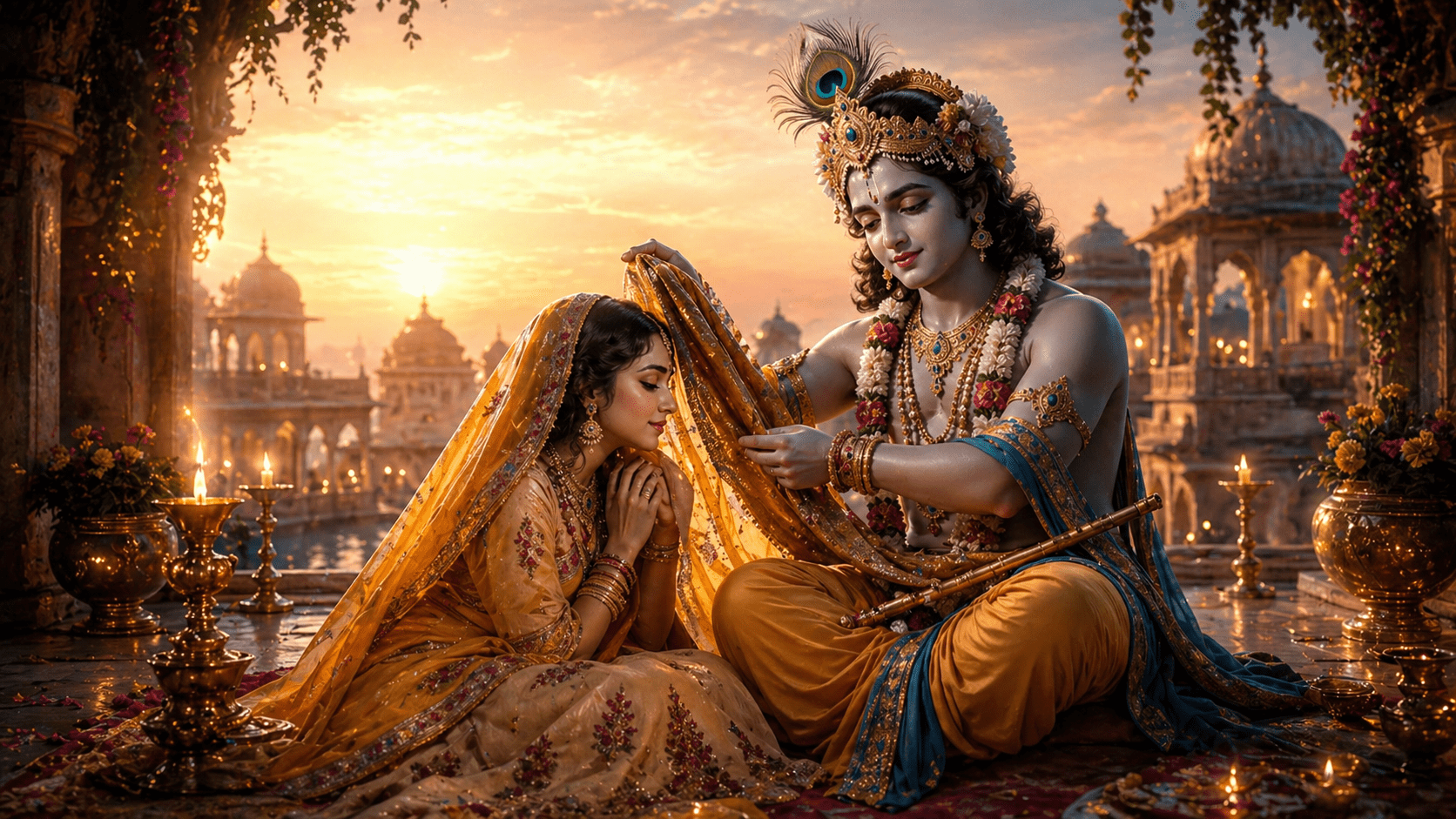
मैं गिरधर के घर जाऊँ. Meera says it plainly, as a woman might say where she is going this evening — I go to Girdhar’s house. For a widowed princess of Mewar in the sixteenth century, that sentence was a scandal in six words. She meant it literally: she left the palace at night for the temple, and she saw nothing to apologise for.
What follows is one of the most complete statements of surrender in all of bhakti poetry. Verse by verse Meera hands over everything a person normally keeps — her clothes, her food, her hours, her seat, and finally the right to be sold. This EkOmkaar Musicals rendition keeps the old Rajasthani words intact and lets them move at the pace of a walk, because that is what the song is: someone going somewhere, gladly, and not coming back.
Lyrics — मैं तो गिरधर के घर जाऊँ
मैं गिरधर के घर जाऊँ ॥
गिरधर म्हाँरो साँचो प्रीतम,
कृष्ण मुरारी देखत रूप लुभाऊँ ॥
रैण पड़ै तब ही उठ जाऊँ,
भोर भये उठ आऊँ ।
रैण दिना वा के संग खेलूँ,
ज्यूँ त्यूँ ताही रिझाऊँ ॥
जो पहिरावै सोई पहिरूँ,
जो दे सोई खाऊँ ।
मेरी उण की प्रीत पुराणी,
उण बिन पल न रहाऊँ ॥
जहाँ बैठावें तितही बैठूँ,
बेचै तो बिक जाऊँ ।
मीरा के प्रभु गिरधर नागर,
कृष्ण मुरारी बलि जाऊँ ॥
Meaning of the Lyrics
The refrain. I go to Girdhar’s house. Girdhar is my true beloved — and seeing the form of Krishna Murari, I am lost in it.
First verse. The moment night falls I rise and go; when dawn breaks I rise and return. Night and day I play in his company, and however I can, I try to delight him.
Second verse. Whatever he dresses me in, that is what I wear. Whatever he gives me, that is what I eat. My love for him is ancient — older than this life — and without him I cannot last a single moment.
Third verse. Wherever he seats me, there I sit. If he chooses to sell me, then I am sold. Meera’s lord is Girdhar Nagar, Krishna Murari — and to him I am an offering, entirely.
The force of the pada is in its ordering. It begins with something anyone might say about a beloved and ends somewhere almost unbearable: बेचै तो बिक जाऊँ. Meera has already lost her husband, her standing, and her family’s protection. Having lost them, she discovers that the one thing left — the will to decide her own fate — is the very thing she wants to give away. That is not resignation. It is the last possible act of love.
History & Devotion
Meera Bai, born a Rathore princess around 1498 and married into the royal house of Mewar, was widowed young. Convention gave her two acceptable paths, and she took neither. She sang, she danced before Krishna, she kept the company of wandering saints, and she declared that her real marriage had always been to Girdhar. Her in-laws treated it as a disgrace to the throne. The traditions hold that attempts were made on her life and that she came through them untouched.
Listen to the language and you can hear where she came from. म्हाँरो for “mine,” रैण for night, उण for him — these are Rajasthani forms, not the polished Braj of the court poets. Meera wrote in the speech of the region she walked through, and that is part of why her padas travelled: farmers and weavers could sing them without translation. Her songs survive in Rajasthani folk repertoires, in Hindustani classical settings, in Carnatic renderings, and in the twentieth-century recordings that carried her voice into every Indian home.
Girdhar — the one who lifted the mountain — recalls Krishna raising Govardhan on a single finger so that ordinary villagers could shelter from the storm. Nagar means the clever, elegant one; Murari, the slayer of the demon Mura. Meera moves between the names in one breath, the way you might use several names for someone you have known a very long time.
And there is the quiet radicalism that keeps this pada alive. Meera never argues with anyone. She does not defend her choice or answer the charges against her. She simply describes her days — when she leaves, what she wears, what she eats, where she sits — and lets the description be the whole reply. It is the calmest defiance in Indian devotional literature.
Listen & Watch
YouTube: Main Girdhar Ke Ghar Jaaun — Meera Bai Bhajan | EkOmkaar Musicals
Spotify: Main Girdhar Ke Ghar Jaaun on Spotify
Subscribe: EkOmkaar Musicals on YouTube
Part of the Meera Bai series — her life, her music, and all nine bhajans with lyrics and meaning. →
राधे राधे 🙏
More from EkOmkaar Musicals
- The Life of Meera Bai — मीरा बाई का जीवन — Her Musical Contributions to Bhakti | EkOmkaar Musicals
- Mere To Giridhar Gopal | मेरे तो गिरिधर गोपाल — Meera Bai Bhajan | Lyrics & Meaning
- Pyare Darsan Dijyo Aay | प्यारे दरसन दीज्यो आय — Meera Bai Bhajan | Lyrics & Meaning
- Chalan Vahi Desh | चालाँ वाही देस — Meera Bai Bhajan | Lyrics & Meaning
- Main Girdhar Ke Ghar Jaaun | मैं तो गिरधर के घर जाऊँ — Meera Bai Bhajan | Lyrics & Meaning
- Jai Jagdish Hare | जय जगदीश हरे — Dashavatar Bhajan | Lyrics & Meaning
- Dashavatara Stotra | प्रलय पयोधि जले — Jayadeva’s Gita Govinda | Lyrics & Meaning
- Guru Purnima 2026 — गुरु पूर्णिमा — Meaning, Story & the Song of the Guru | EkOmkaar Musicals