About This Song
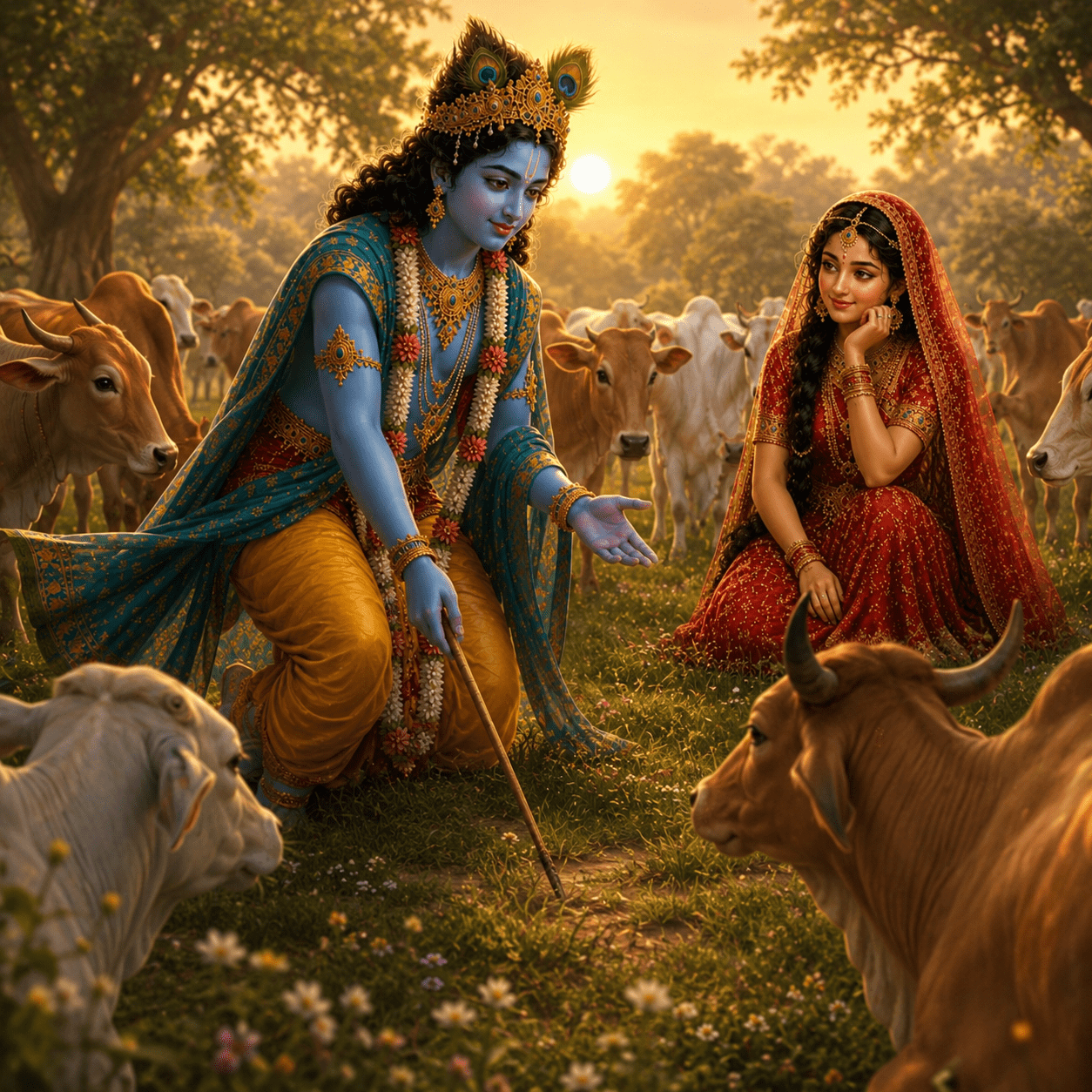
मेरे तो गिरिधर गोपाल, दूसरा न कोई. Five hundred years ago a princess of Mewar said these words and refused to unsay them — through a palace that disowned her, a family that shamed her, and, the stories tell us, a cup of poison. Giridhar Gopal is mine, and there is no other. Not a wish. Not a prayer for something. A statement of fact about where she already belonged.
This EkOmkaar Musicals rendition takes Meera’s most famous line and lets it breathe — a slow flute, an unhurried voice, and a refrain that keeps returning the way a heart returns to one name. Around it grow verses of what that belonging feels like from the inside: tears at the memory of his play, the temple and the courtyard collapsing into the same place, and the vow that whatever comes, she will not let go.
Lyrics — मेरे तो गिरिधर गोपाल
मुखड़ा
मेरे तो गिरिधर गोपाल
दूसरा न कोई
चरणों में बैठे बैठे
मैं भूलूँ जग रोई
स्थायी
मेरे तो गिरिधर गोपाल
मेरे मन का सोई
मेरे रोम रोम में बसा है
दूसरा न कोई
अंतरा
नयनों से धारा बहे
लीला तेरी सोचूँ
मंदिर भी, घर आँगन भी
बस तुझे ही पूछूँ
स्थायी
मेरे तो गिरिधर गोपाल
मेरे मन का सोई
मेरे रोम रोम में बसा है
दूसरा न कोई
संचारी
कभी न छोड़ूँ साथ तेरा
चाहे जो हो जाए
तू ही बंधु, सखा, सहारा
तू ही घर, तू ही आये
स्थायी
मेरे तो गिरिधर गोपाल
मेरे मन का सोई
मेरे रोम रोम में बसा है
दूसरा न कोई
समापन
मेरे तो गिरिधर गोपाल
दूसरा न कोई
Meaning of the Lyrics
The opening. Giridhar Gopal — the cowherd who lifted the mountain — is mine, and there is no one else. Sitting and sitting at his feet, I forget the world and all its weeping.
The refrain. He is the one my heart has chosen. He lives in every pore of me, in every particle of this body. There is no other.
Second verse. A stream flows from my eyes as I think of your leelas. The temple, and the courtyard of my own house — both are the same to me now, because in both I am only asking after you.
The bridge. I will never let go of your company, whatever may come. You alone are my kin, my companion, my support. You alone are home — and you alone are the one who comes.
The devotional heart of it is that closing pair. तू ही घर, तू ही आये — you are the house and you are also the one who arrives at it. For Meera, Krishna is not a guest visiting the shrine of her life; he is the shrine, the arrival, and the waiting, all at once. That is why she could lose a kingdom without feeling she had lost anything.
History & Devotion
Meera Bai was born in Rajasthan around 1498, a Rathore princess married into the ruling house of Mewar. When her husband died young, the expectation was clear: a widow of her rank should withdraw into silence. Instead she went to the temples, danced before the image of Krishna, sang with wandering saints, and told anyone who asked that she was already married — to Giridhar. Her in-laws considered it a scandal. The traditions say they tried more than once to end her life, and that she survived each attempt, unbothered, still singing.
मेरे तो गिरिधर गोपाल, दूसरा न कोई is the line that has carried her name across five centuries. It is not soft; it is a refusal. In four words she dismisses every claim society had on her — husband, family, caste, crown — and names her only allegiance. That defiance is why she is sung as fiercely in the songs of social reformers as in the temples, and why women in particular have kept her alive.
Musically, Meera’s padas survive in an enormous range of settings — Rajasthani folk, Hindustani khayal, Carnatic renderings, Bhajan-samaj kirtan, and the film recordings that made her a household voice in the twentieth century. What survives every arrangement is the structure of the thought: a claim stated, then lived into, then stated again. The refrain is the form and the meaning at once.
Giridhar means “the one who lifted the mountain” — Krishna raising Govardhan on one finger to shelter the villagers from the storm. It is a deliberate choice of name. Meera is not calling on a distant god. She is calling on the one who held up a mountain so that ordinary people could stand underneath it and stay dry.
Listen & Watch
YouTube: Mere To Giridhar Gopal — Meera Bai Bhajan | EkOmkaar Musicals
Subscribe: EkOmkaar Musicals on YouTube
Part of the Meera Bai series — her life, her music, and all nine bhajans with lyrics and meaning. →
राधे राधे 🙏
More from EkOmkaar Musicals
- The Life of Meera Bai — मीरा बाई का जीवन — Her Musical Contributions to Bhakti | EkOmkaar Musicals
- Mere To Giridhar Gopal | मेरे तो गिरिधर गोपाल — Meera Bai Bhajan | Lyrics & Meaning
- Pyare Darsan Dijyo Aay | प्यारे दरसन दीज्यो आय — Meera Bai Bhajan | Lyrics & Meaning
- Chalan Vahi Desh | चालाँ वाही देस — Meera Bai Bhajan | Lyrics & Meaning
- Main Girdhar Ke Ghar Jaaun | मैं तो गिरधर के घर जाऊँ — Meera Bai Bhajan | Lyrics & Meaning
- Jai Jagdish Hare | जय जगदीश हरे — Dashavatar Bhajan | Lyrics & Meaning
- Dashavatara Stotra | प्रलय पयोधि जले — Jayadeva’s Gita Govinda | Lyrics & Meaning
- Guru Purnima 2026 — गुरु पूर्णिमा — Meaning, Story & the Song of the Guru | EkOmkaar Musicals