About This Song
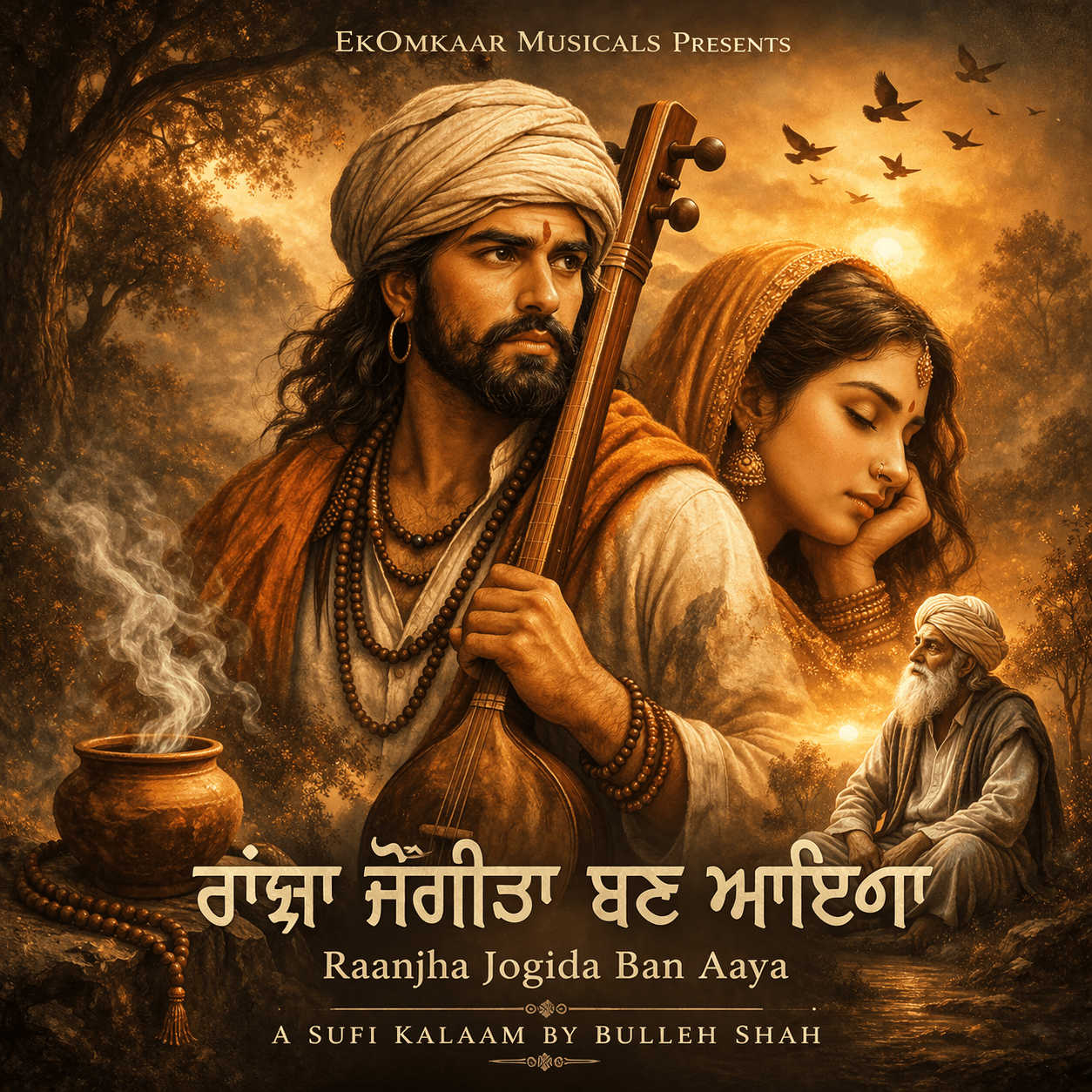
ਰਾਂਝਾ ਜੋਗੀੜਾ ਬਣ ਆਇਆ — ਵਾਹ ਸਾਂਗੀ ਸਾਂਗ ਰਚਾਇਆ. Ranjha has come dressed as a jogi. What a performance the player has staged! Bulleh Shah opens with a line that is half wonder and half accusation, and the whole kafi lives in that doubleness — delight at the disguise, and the ache of a Beloved who will not simply arrive as himself.
The story underneath is the one every Punjabi child knows. Ranjha, unable to reach Heer by any ordinary means, pierces his ears, puts on the rings of an ascetic, and returns as a wandering yogi. Bulleh Shah takes that piece of folk romance and turns it into theology: the Divine comes in disguise, and recognising him is the whole work of a life. This EkOmkaar Musicals rendition keeps the old Punjabi intact and lets the refrain circle back the way the thought does.
Lyrics — ਰਾਂਝਾ ਜੋਗੀੜਾ ਬਣ ਆਇਆ
ਰਾਂਝਾ ਜੋਗੀੜਾ ਬਣ ਆਇਆ
ਵਾਹ ਸਾਂਗੀ ਸਾਂਗ ਰਚਾਇਆ ॥
ਏਸ ਜੋਗੀ ਦੇ ਨੈਨ ਕਟੋਰੇ,
ਬਾਜ਼ਾਂ ਵਾਂਙੂ ਲੈਂਦੇ ਡੋਰੇ ।
ਮੁੱਖ ਡਿੱਠਿਆਂ ਦੁੱਖ ਜਾਵਨ ਝੋਰੇ,
ਇਨ੍ਹਾਂ ਅੱਖੀਆਂ ਲਾਲ ਵੰਜਾਇਆ ॥
ਏਸ ਜੋਗੀ ਦੀ ਕੀ ਨਿਸ਼ਾਨੀ,
ਕੰਨ ਵਿਚ ਮੁੰਦਰਾਂ ਗਲ ਵਿਚ ਗਾਨੀ ।
ਸੂਰਤ ਇਸ ਦੀ ਯੂਸਫ਼ ਸਾਨੀ,
ਏਸ ਅਲਫ਼ੋਂ ਆਹਦ ਬਣਾਇਆ ॥
ਰਾਂਝਾ ਜੋਗੀ ਤੇ ਮੈਂ ਜੋਗਿਆਣੀ,
ਇਸ ਦੀ ਖਾਤਰ ਭਰਸਾਂ ਪਾਣੀ ।
ਐਵੇਂ ਪਿਛਲੀ ਉਮਰ ਵਿਹਾਣੀ,
ਏਸ ਹੁਣ ਮੈਨੂੰ ਭਰਮਾਇਆ ॥
ਬੁੱਲ੍ਹਾ ਸ਼ਹੁ ਦੀ ਇਹ ਗਤ ਬਣਾਈ,
ਪ੍ਰੀਤ ਪੁਰਾਣੀ ਸ਼ੋਰ ਮਚਾਈ ।
ਇਹ ਗੱਲ ਕੀਕੂੰ ਛੁਪੇ ਛੁਪਾਈ,
ਨੀ ਤਖ਼ਤ ਹਜ਼ਾਰਿਓਂ ਧਾਇਆ ॥
देवनागरी में — Lyrics in Devanagari
रांझा जोगीड़ा बण आया
वाह सांगी सांग रचाइआ ॥
एस जोगी दे नैन कटोरे,
बाज़ां वांङू लैंदे डोरे ।
मुक्ख डिठ्यां दुक्ख जावन झोरे,
इन्हां अक्खियां लाल वंजाइआ ॥
एस जोगी दी की निशानी,
कन्न विच मुन्दरां गल विच गानी ।
सूरत इस दी यूसफ़ सानी,
एस अलफ़ों आहद बणाइआ ॥
रांझा जोगी ते मैं जोगयानी,
इस दी खातर भरसां पाणी ।
एवें पिछली उमर वेहाणी,
एस हुन मैनूं भरमाइआ ॥
बुल्ल्हा शहु दी इह गत बणाई,
प्रीत पुरानी शोर मचाई ।
इह गल्ल कीकूं छुपे छुपाई,
नी तख़त हज़ार्युं धाइआ ॥
Meaning of the Lyrics
The refrain. Ranjha has come disguised as a jogi. What a spectacle the player has staged — what a performance this is.
First verse. This jogi’s eyes are deep as drinking bowls, and they strike like a falcon taking its prey. One look at his face and every sorrow and worry departs. These eyes of his have made me lose everything.
Second verse. And what are the marks of this jogi? Rings through his ears, a thread at his throat. His face is a second Yusuf. From the letter alif he has made ahad — the One.
Third verse. Ranjha is the jogi and I am the jogi’s woman. For his sake I will carry water. My whole later life has gone this way — and now he has bewitched me completely.
The signature verse. Bulleha, the Lord has brought me to this state; an old love has raised an uproar. How could such a thing ever be hidden? He came rushing from Takht Hazara.
The line worth sitting with is ਏਸ ਅਲਫ਼ੋਂ ਆਹਦ ਬਣਾਇਆ. Alif is the first letter of the Arabic alphabet — a single upright stroke, the simplest mark that can be made. Ahad means “the One,” a name of God. Bulleh Shah is saying that from the barest single stroke, the whole of divine Oneness is made. It is the seed of his entire teaching: everything is one thing, and the many shapes it wears — jogi, Ranjha, beloved, stranger — are the performance, not the truth.
And ਸਾਂਗੀ ਸਾਂਗ ਰਚਾਇਆ carries that further. A saang is a folk theatrical, a costumed play performed in village squares. Bulleh Shah is calling the world a staged drama and God the one who staged it — wonder and complaint in the same breath, which is exactly how it feels to love someone who keeps arriving in a form you have to work to recognise.
History & Devotion
Bulleh Shah (c. 1680–1757) was a Punjabi Sufi of the Qadiri order, born in Uch and settled at Kasur, in present-day Pakistan. His murshid was Shah Inayat Qadiri, an Arain by caste — and Bulleh Shah, a Syed, was condemned by his own family for bowing to a man socially beneath him. His response was to make that scandal the subject of his poetry. He wrote in Punjabi rather than Persian, and he wrote for people who worked with their hands.
The Heer–Ranjha romance runs through his kalam like a second language. Heer of the Sial clan and Dhido Ranjha of Takht Hazara are Punjab’s great lovers, kept apart by family and custom. When every other path closes, Ranjha becomes a jogi — pierces his ears, takes the ascetic’s rings — and returns unrecognised. Sufi poets seized on that episode because it holds their entire idea in a single image: the seeker abandons name, caste, and family in order to reach the Beloved, and the Beloved arrives in a form the world walks past.
The comparison to Yusuf — Joseph of the Qur’an and the Bible, byword for beauty so great it stopped onlookers mid-motion — is deliberate. Bulleh Shah is placing a Punjabi village jogi alongside a prophet, refusing to keep folk romance and sacred scripture in separate rooms. That refusal is the whole reason his verse was dangerous in his lifetime and beloved ever since.
These kafis have never left the living tradition. They are sung at shrines, in qawwali gatherings, in Punjabi folk settings on both sides of the border, and by generations of modern singers who found in them a way to talk about God that needed no permission from any clergy.
Listen & Watch
YouTube: Ranjha Jogira Ban Aaya — Bulleh Shah Kafi | EkOmkaar Musicals
Spotify: Ranjha Jogira Ban Aaya on Spotify
Subscribe: EkOmkaar Musicals on YouTube
ਇਸ਼ਕ ਅੱਲਾਹ 🙏
More from EkOmkaar Musicals
- The Life of Meera Bai — मीरा बाई का जीवन — Her Musical Contributions to Bhakti | EkOmkaar Musicals
- Mere To Giridhar Gopal | मेरे तो गिरिधर गोपाल — Meera Bai Bhajan | Lyrics & Meaning
- Pyare Darsan Dijyo Aay | प्यारे दरसन दीज्यो आय — Meera Bai Bhajan | Lyrics & Meaning
- Chalan Vahi Desh | चालाँ वाही देस — Meera Bai Bhajan | Lyrics & Meaning
- Main Girdhar Ke Ghar Jaaun | मैं तो गिरधर के घर जाऊँ — Meera Bai Bhajan | Lyrics & Meaning
- Jai Jagdish Hare | जय जगदीश हरे — Dashavatar Bhajan | Lyrics & Meaning
- Dashavatara Stotra | प्रलय पयोधि जले — Jayadeva’s Gita Govinda | Lyrics & Meaning
- Guru Purnima 2026 — गुरु पूर्णिमा — Meaning, Story & the Song of the Guru | EkOmkaar Musicals