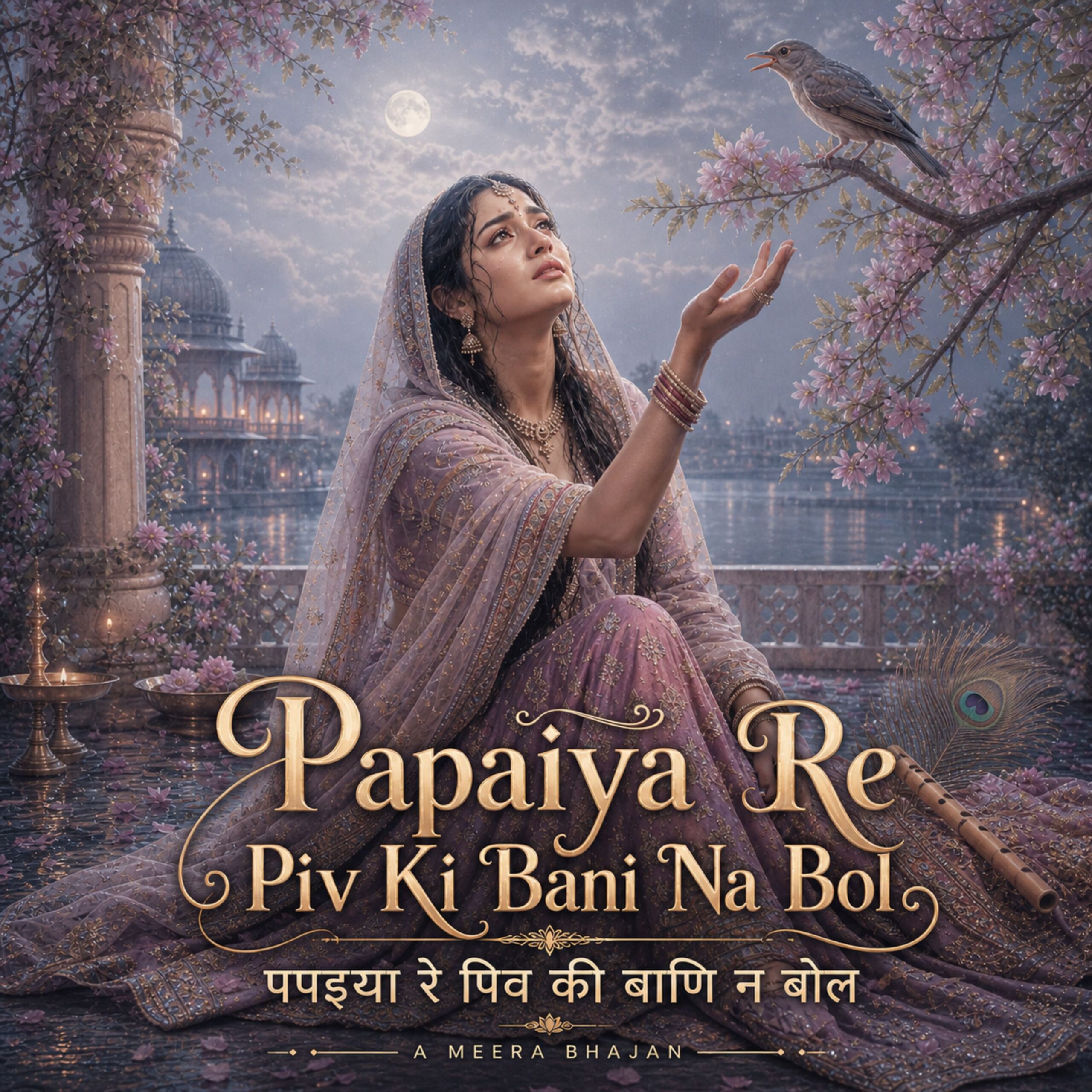

About This Song
Papiya Re Piv Ki Baani Na Bol is Meera Bai at her most disarmingly human — a bhajan where devotion doesn’t arrive as sweetness but as something closer to exasperation. She is not singing to Krishna directly here; she is scolding a bird. The papiha, whose call is traditionally heard by poets as crying out for its beloved, will not stop making that sound — and every note of it lands on Meera like salt in an open wound.
What makes this composition so striking is its emotional honesty. Meera doesn’t perform patient longing; she threatens the bird, bargains with it, and finally breaks down into her own confession of helplessness. It is devotional music that admits separation can curdle into something sharper than sorrow — and finds, in that admission, an even deeper truth about how completely she belongs to Krishna.
Lyrics
पपइया रे पिव की बाणि न बोल।
सुणि पावेली विरहणी रे थारी राखेली पाँख मरोड़॥
पपइया रे पिव की बाणि न बोल।
सुणि पावेली विरहणी रे थारी राखेली पाँख मरोड़॥चाँच कटाऊँ पपइया रे ऊपर कालो रे लूण।
पिव मेरा मैं पिव की रे तू पिव कहै सु कूण॥
पपइया रे पिव की बाणि न बोल।
सुणि पावेली विरहणी रे थारी राखेली पाँख मरोड़॥थारा सबद सुहावणा रे जो पिव मेला आज।
चाँच मढ़ाऊँ थारी सोवनी रे तू मेरे सिरताज॥
पपइया रे पिव की बाणि न बोल।
सुणि पावेली विरहणी रे थारी राखेली पाँख मरोड़॥प्रीतम कूँ पतियाँ लिखूँ रे कागा तू ले जाय।
जाइ प्रीतम जी सूँ यूँ कहै रे थारी विरहणि धान न खाय॥
पपइया रे पिव की बाणि न बोल।
सुणि पावेली विरहणी रे थारी राखेली पाँख मरोड़॥मीरा दासी व्याकुली रे पिव पिव करत विहाय।
वेग मिलो प्रभु अंतरजामी तुम बिन रहयौ न जाय॥
पपइया रे पिव की बाणि न बोल।
सुणि पावेली विरहणी रे थारी राखेली पाँख मरोड़॥
Meaning of the Lyrics
The refrain sets the entire scene: papiha, don’t speak your beloved’s cry — because if the separated one (Meera herself) hears it, it will only twist her wings further, deepening a pain that already keeps her from resting. The bird’s call, which poets traditionally hear as crying out for its own beloved, becomes for Meera an unbearable mirror of her own longing for Krishna.
In the second verse Meera turns almost fierce: she threatens to cut the papiha’s beak and rub salt over the wound, demanding to know who gave it the right to speak of “piv” at all — since Krishna is her beloved, and hers alone. It’s a striking flash of jealous, wounded love, the kind that can only come from someone whose devotion is total rather than composed.
But the anger dissolves into something gentler in the next breath. If the papiha’s cry could actually bring her beloved to her today, Meera says, she would gild its beak in gold and crown it above her own head in gratitude. The bird is never really the enemy — it is a stand-in for every reminder of separation, capable of being cursed one moment and adored the next, depending only on whether it might reunite her with Krishna.
The final verses turn the bird into a messenger rather than a tormentor. Meera asks it to carry a letter to her beloved, telling him plainly that his separated one cannot even eat while apart from him. And in the closing lines she drops the metaphor altogether: this servant Meera is anguished, endlessly calling out “piv, piv,” and begs Krishna — the one who knows every heart from within — to come quickly, because she cannot go on without him.
History & Devotion
The papiha appears throughout classical and devotional Indian poetry as one of the most enduring symbols of viraha, or the pain of separation from the beloved — its call, heard by generations of poets as an unmistakable cry, made it a natural vessel for expressing longing that words alone couldn’t carry. Meera Bai draws on this well-worn convention but pushes past its usual gentleness into real emotional volatility, which is part of what makes this particular bhajan so memorable within her body of work.
As with much of Meera’s poetry, this composition has been carried forward for centuries through oral and musical tradition, sung across Rajasthani and broader Hindi devotional circles, and later reaching wider audiences through recordings by artists such as Lata Mangeshkar. It sits alongside Meera’s other bhajans of separation as proof that her devotion to Krishna was never a placid or decorous thing — it was consuming enough to make her threaten a bird one moment and beg forgiveness of it the next, all in service of the same overwhelming love.
Listen & Watch
▶️ Watch on YouTube | 🎧 Listen on Spotify
राधे राधे 🙏
More from EkOmkaar Musicals
- Hari Bin Kaun Gati Meri — हरि बिन कूण गति मेरी — Meera Bai Bhajan | EkOmkaar Musicals
- Muunh Aayi Baat Na Rehandi Hai — ਮੂੰਹ ਆਈ ਗੱਲ ਨਾ ਰਹਿੰਦੀ ਹੈ — Bulleh Shah Kalam | EkOmkaar Musicals
- Haaji Log Makke Nu Jaande — حاجی لوگ مکے نوں جاندے — Bulleh Shah Kalam
- Golden Hearts, Golden Jubilee — Mom & Dad, Forever Our Home (Lyrics & Meaning)
- Bullah Ki Jaana Main Kaun — بلھا کی جاناں مَیں کون — Bulleh Shah Kalam