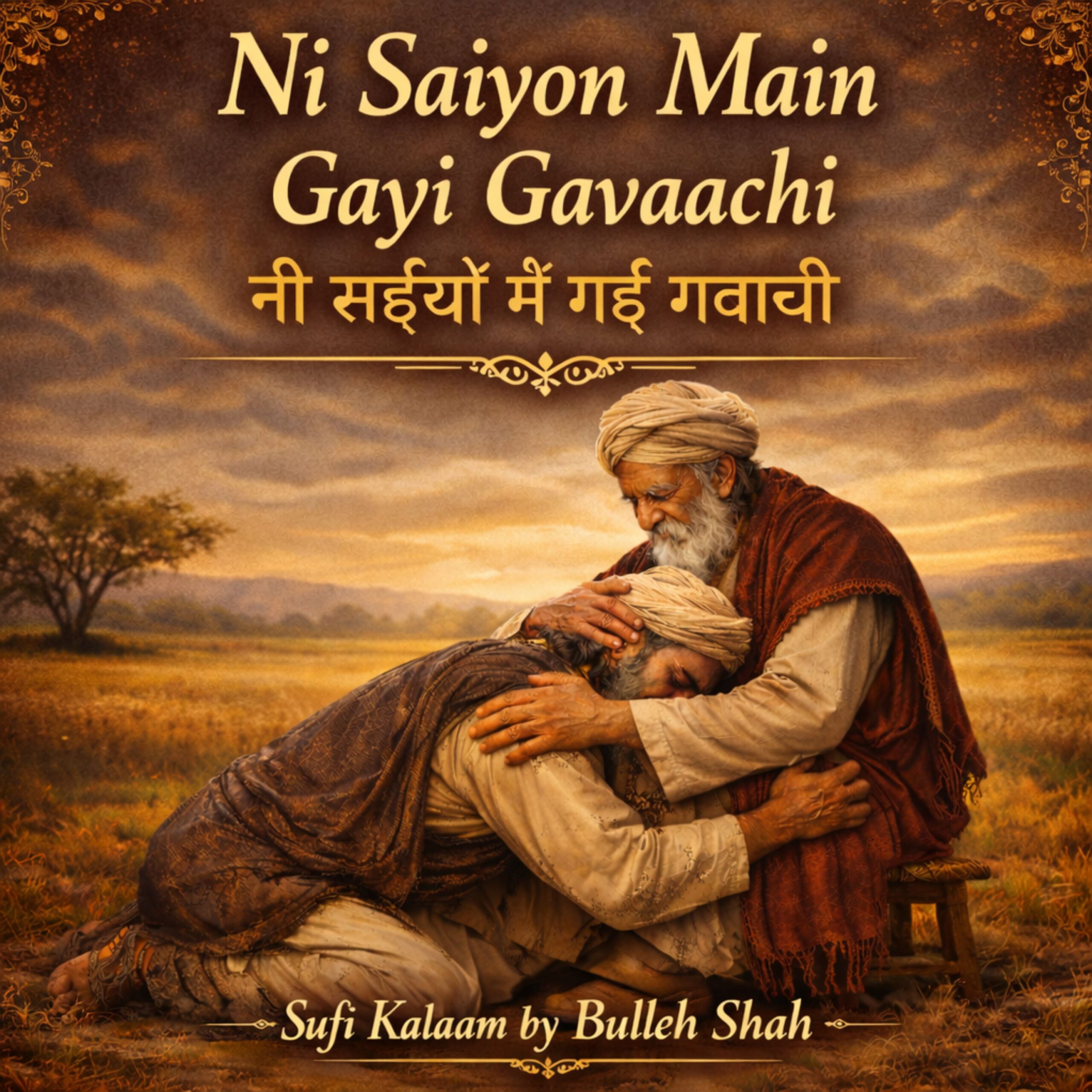
About This Song
ਨੀ ਸਈਓ ਮੈਂ ਗਈ ਗਵਾਚੀ — ਖੋਲ੍ਹ ਘੁੰਘਟ ਮੁੱਖ ਨਾਚੀ. O friends, I have gone and got myself lost. I threw open the veil and danced with my face bare. Two lines, and the whole kafi is already there: something has been lost, and the loss has produced dancing rather than grief.
For a woman in eighteenth-century Punjab, throwing off the ghunghat in public was not a poetic flourish — it was the abandonment of respectability itself. Bulleh Shah, writing in a woman’s voice as the Sufi poets did, uses it for the moment when a seeker stops caring what anyone thinks. What follows is a report from the far side of that: no name left, no trace, and a secret that must not be repeated.
Lyrics — ਨੀ ਸਈਓ ਮੈਂ ਗਈ ਗਵਾਚੀ
ਸਈਓ ਮੈਂ ਗਈ ਗਵਾਚੀ,
ਖੋਲ੍ਹ ਘੁੰਘਟ ਮੁੱਖ ਨਾਚੀ ॥
ਜਿਤ ਵੱਲ ਵੇਖਾਂ ਉਤ ਵੱਲ ਓਹੀ,
ਕਸਮ ਓਸੇ ਦੀ ਹੋਰ ਨਾ ਕੋਈ ।
ਫ਼ਹੂਨਾ ਮਾਅਕੁਮ ਫਿਰ ਗਈ ਧ੍ਰੋਹੀ,
ਜਬ ਗੋਰ ਤੇਰੀ ਬਾਚੀ ॥
ਨਾਮ ਨਿਸ਼ਾਨ ਨਾ ਮੇਰਾ ਸਈਓ,
ਜੋ ਆਖਾਂ ਤੁਸੀਂ ਚੁੱਪ ਕਰ ਰਹਿਓ ।
ਇਹ ਗੁਲ ਮੂਲ ਕਸੇ ਨਾ ਕਹਿਓ,
ਬੁੱਲ੍ਹਾ ਖ਼ੂਬ ਹਕੀਕਤ ਜਾਚੀ ॥
देवनागरी में — Lyrics in Devanagari
सईयो मैं गई गवाची,
खोल घुँघट मुक्ख नाची ॥
जित वल्ल वेखां उत वल्ल ओही,
कसम ओसे दी होर ना कोई ।
फैहूना माअकुम फिर गई ध्रोही,
जब गोर तेरी बाची ॥
नाम निशान ना मेरा सईयो,
जो आखां तुसीं चुप्प कर रहियो ।
इह गुल मूल कसे ना कहियो,
बुल्ल्हा ख़ूब हकीकत जाची ॥
Meaning of the Lyrics
The refrain. O friends, I have gone and lost myself. I opened the veil and danced with my face uncovered.
First verse. Whichever way I look, there he is — I swear by him, there is nothing else. Fa-huwa ma’akum — and then the betrayal turned, when your grave was read out.
Second verse. No name of mine remains, friends, no trace at all. Whatever I say now, you keep silent. Never repeat this thing to anyone. Bulleha has tested the reality well, and found it good.
The Arabic phrase in the middle is the hinge of the poem. Fa-huwa ma’akum aynama kuntum — “and He is with you wherever you are” — is from the Qur’an. Bulleh Shah drops it untranslated into a Punjabi village song, right after saying that everywhere he looks, he sees only the One. The scripture is not being quoted as authority; it is being offered as a description of what he is actually experiencing at that moment.
And then the instruction that closes it: never repeat this to anyone. Sufi poetry is full of this warning, and it is not modesty. Saying “I look everywhere and see only God, and I have no name left” is, stated plainly to the wrong listener, a claim that has cost mystics their lives. Bulleh Shah tells his friends to be quiet — and then writes it down in a song that has been sung publicly for three hundred years. That contradiction is the joke and the courage of the piece at once.
ਗਵਾਚੀ — lost, mislaid, the way you lose a small object — is the perfect word. Not destroyed, not sacrificed. Simply, casually, gone. This is fana, the annihilation of the self, described as an ordinary domestic mishap by someone who has never been happier.
History & Devotion
Bulleh Shah (c. 1680–1757) was a Punjabi Sufi of the Qadiri order, born in Uch and settled at Kasur, in present-day Pakistan. His murshid was Shah Inayat Qadiri, an Arain by caste, while Bulleh Shah was a Syed — and his family disowned him for bowing to a man they considered his social inferior. His answer was to write in Punjabi rather than Persian, for people who worked with their hands, and to make his own disgrace the subject of the work.
Writing in a woman’s voice was standard practice for the Punjabi Sufis. The soul before God is feminine in this poetry — the bride, the lover, the one who waits — so a male poet speaking as sajni to her saiyaan would have raised no eyebrows. What raises eyebrows is what she does with that voice here: throws off the veil and dances in the open. Bulleh Shah himself is said to have danced publicly, dressed as a woman, to win back the favour of his murshid after offending him. This kafi is very close to the bone.
The ghunghat is worth pausing on. It is not merely cloth. It stands for everything that regulates a life from outside: family honour, caste propriety, the opinion of neighbours. To open it is to declare that none of those hold any more. The mystic’s freedom in this poem is not achieved through argument or study — it is achieved by ceasing to care, in public, on purpose.
His kafis remain in continuous performance: at his shrine in Kasur, in qawwali gatherings, in Punjabi folk repertoires on both sides of the border, and in the work of modern singers who found in them a way of speaking about God that requires nobody’s permission.
Listen
Spotify: Ni Saiyon Main Gayi Gavachi on Spotify
Subscribe: EkOmkaar Musicals on YouTube
ਇਸ਼ਕ ਅੱਲਾਹ 🙏
More from EkOmkaar Musicals
- Main Aape Ranjha Hoi | ਮੈਂ ਆਪੇ ਰਾਂਝਾ ਹੋਈ — Bulleh Shah Kafi | Lyrics & Meaning
- Saade Val Mukhda Mod | ਸਾਡੇ ਵੱਲ ਮੁਖੜਾ ਮੋੜ — Bulleh Shah Kafi | Lyrics & Meaning
- Ranjha Jogira Ban Aaya | ਰਾਂਝਾ ਜੋਗੀੜਾ ਬਣ ਆਇਆ — Bulleh Shah Kafi | Lyrics & Meaning
- The Life of Meera Bai — मीरा बाई का जीवन — Her Musical Contributions to Bhakti | EkOmkaar Musicals
- Mere To Giridhar Gopal | मेरे तो गिरिधर गोपाल — Meera Bai Bhajan | Lyrics & Meaning
- Pyare Darsan Dijyo Aay | प्यारे दरसन दीज्यो आय — Meera Bai Bhajan | Lyrics & Meaning
- Chalan Vahi Desh | चालाँ वाही देस — Meera Bai Bhajan | Lyrics & Meaning
- Main Girdhar Ke Ghar Jaaun | मैं तो गिरधर के घर जाऊँ — Meera Bai Bhajan | Lyrics & Meaning